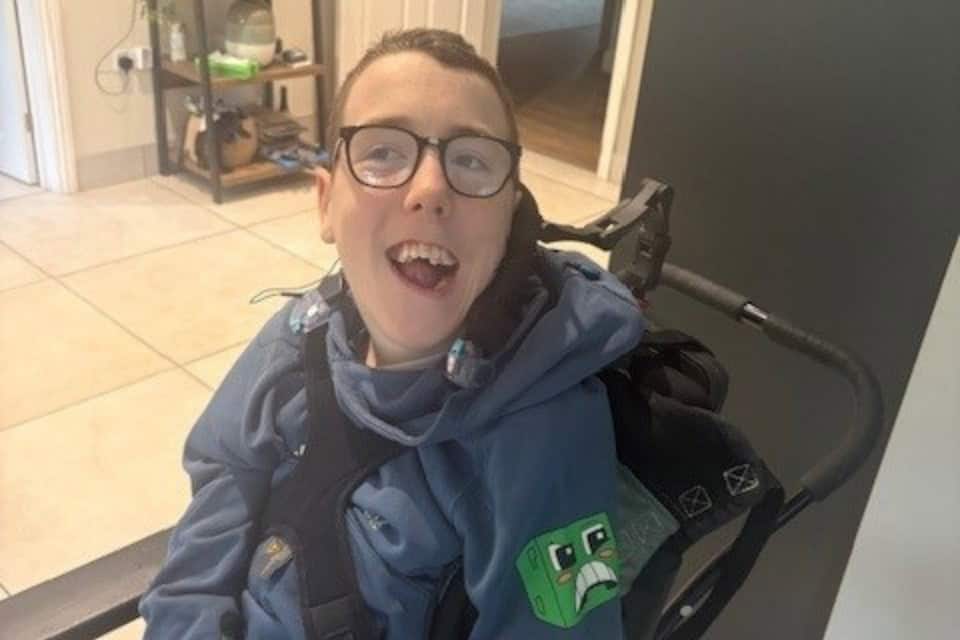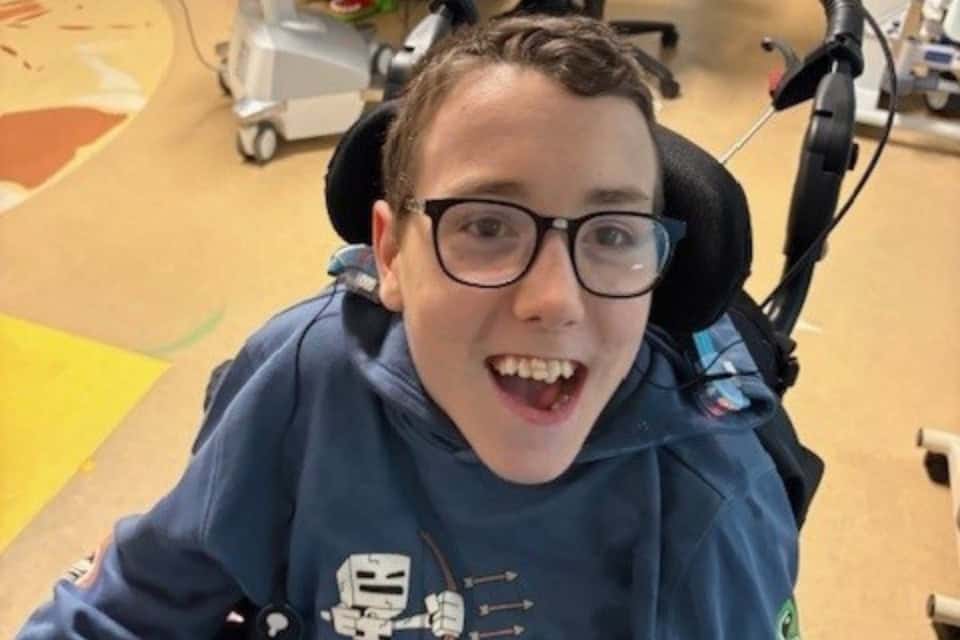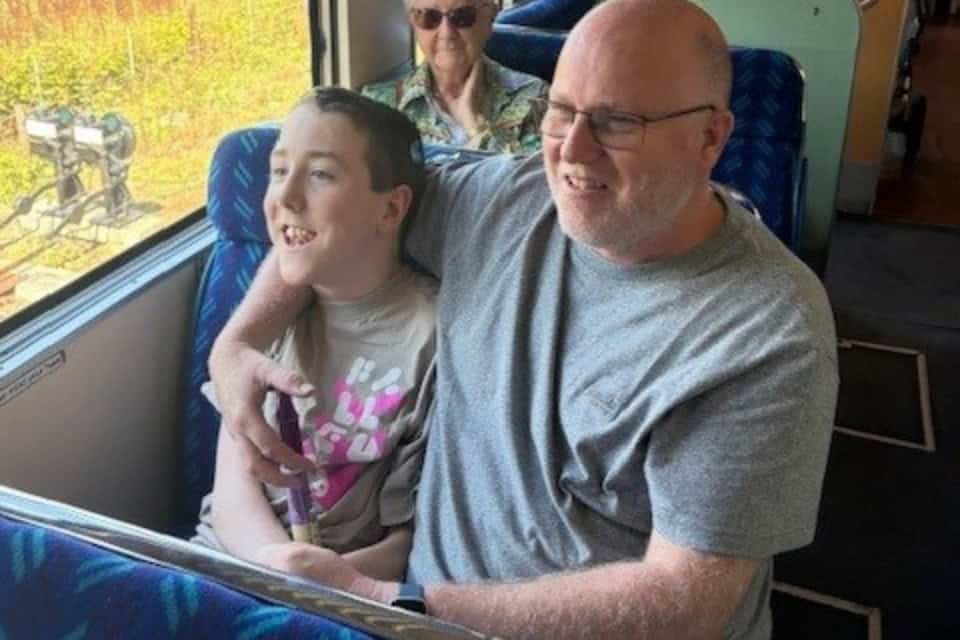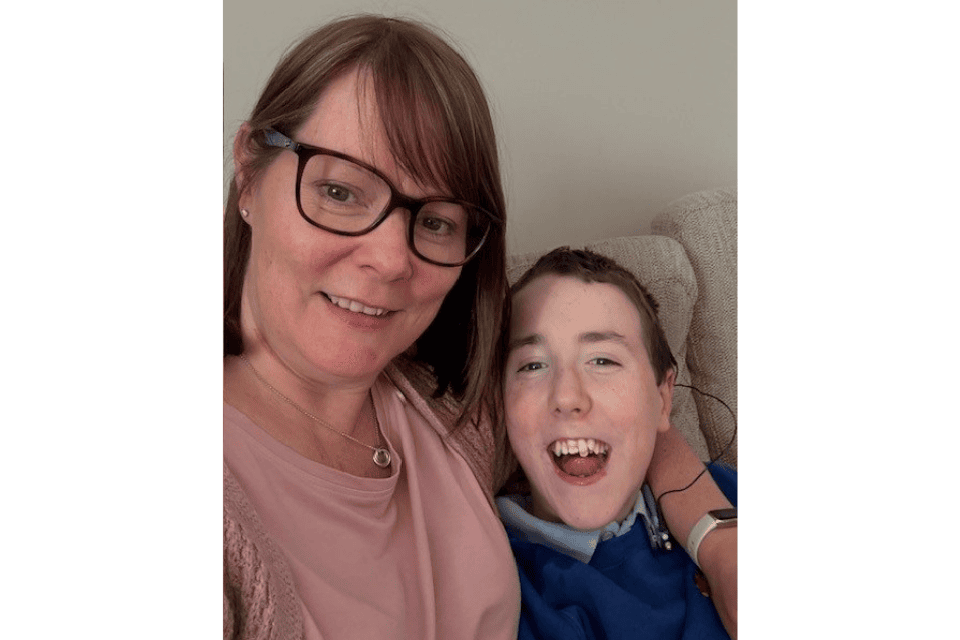
A mum whose son lives with the most severe form of cerebral palsy says she only truly switches off when he is receiving care at The Nook.
Christopher McAnulty has quadriplegic cerebral palsy and dystonia – a chronic neurological movement disorder characterised by involuntary, often painful muscle contractions, spasms and abnormal twisting postures.
The 15-year-old’s dystonia affects his whole body, but particularly his upper limbs, neck and jaw.
Christopher, who was born profoundly deaf and has bilateral cochlear implants, has been receiving care from East Anglia’s Children’s Hospices (EACH) at its Norfolk base since 2020. He has two-night stays dotted throughout the year.
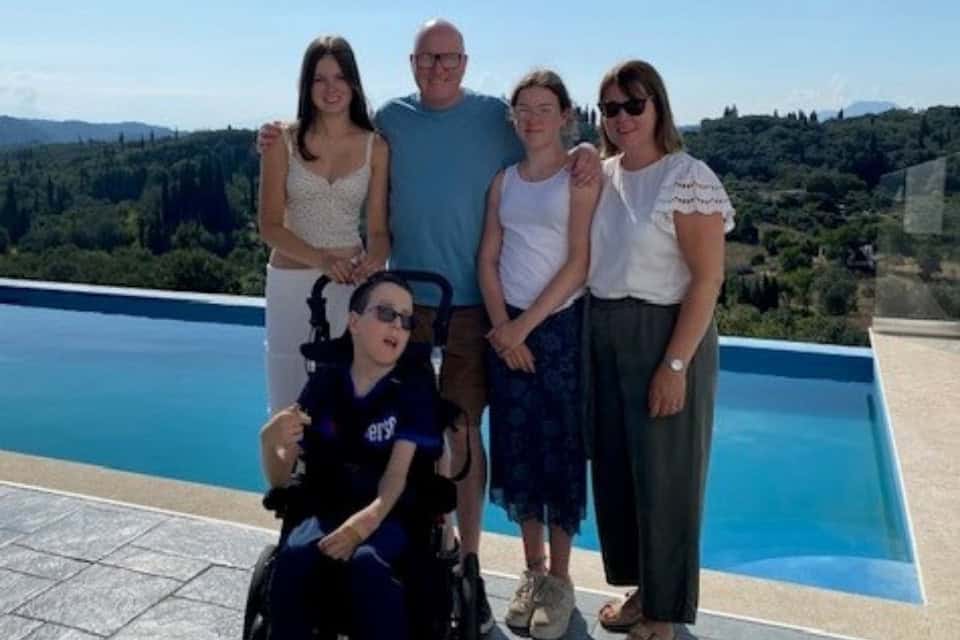
Mum Clare says it makes an invaluable difference, giving her and husband Martin an opportunity to press pause and spend time with daughters Bronagh and Ciara.
“The Nook is a wonderful place,” she said.
“The facilities are fantastic, and the staff are great with Christopher.
“It’s the only true break we get. We’ve got carers that come into our home, and they’re amazing, but you never truly switch off or stop listening.
“Providing care 24-7 is hard and, at times, relentless, so to have somewhere he can go where we’ve got full confidence he’ll be looked after is priceless.
“It’s nice to not have our daily routine and strict timetable, which we must follow to keep him as well as we can.
“It’s also nice to spend time with each other and our other children, who very much take second place.
“To have uninterrupted sleep and not have to get up and/or listen out for Christopher is nice. It’s invaluable to us, and, without EACH, we’d never have a rest or break. It also gives him a break from us, which is equally important as he gets older.”
Christopher particularly loves music therapy and spending time in the sensory room, during his stays at The Nook.
He loves arts, crafts and baking, likes to be kept busy and relishes new experiences.
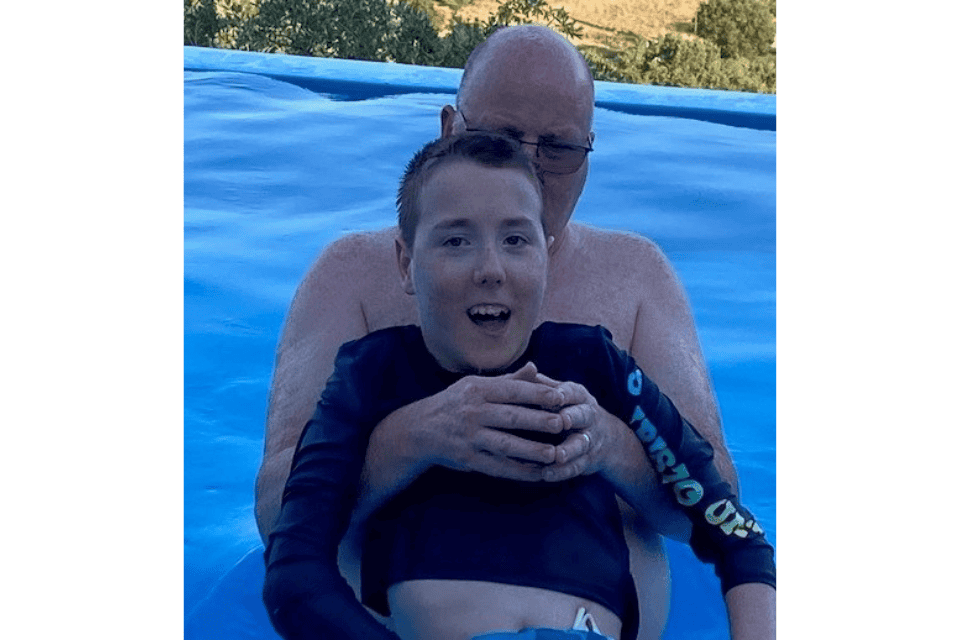
Swimming is Christopher’s favourite thing to do and so good for children with cerebral palsy and particularly dystonia. It gives them time out of their supportive equipment and allows their muscles to relax.
“We do make use of the hydro pool at The Nook,” added Clare.
“Christopher also loves watching television and films and enjoys interacting with members of the care team, who recognise and coax out his sense of humour and sing along to his familiar soundtracks.
“He’s a sociable boy and loves the attention and fuss he gets when he’s there.
“Very often he’ll be in with friends he recognises from school, and there are members of staff he knows and loves to see.
“We can use The Nook to meet his friends and make use of the park and facilities, which is great.
“He’s an incredibly bright boy, and we’re so proud of him. Despite everything he continues to face, he’s such a happy child, who is nearly always smiling.”
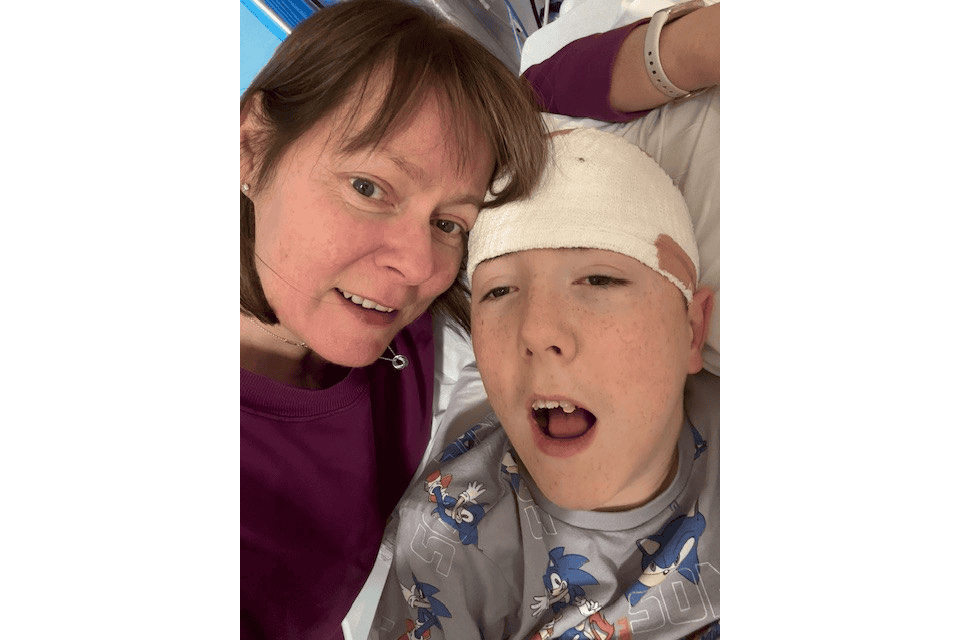
In the last six months, Christopher has undergone a surgical procedure to insert Deep Brain Stimulation (DBS).
This is to aid his dystonia, which was getting progressively worse. The dystonic episodes were impacting all aspects of his life, including communication, sleep, posture and eating.
His family have been attending the Evelina Children’s Hospital for the last few years building up to the surgery and are now starting to see positive signs that the DBS is helping.
The procedure involves two thin, insulated electrodes being inserted into the brain. They are connected by a wire under the skin to a battery, and the device operates similarly to a pacemaker, delivering targeted electrical pulses that block the signals causing the symptoms of dystonia.
“It went well, and he recovered quicker than we expected,” said Clare.
“Unfortunately, he developed complications with one of the head wounds, requiring antibiotics, and has suffered with side-effects as a result.
“We hope he’s now over those hurdles, though, and we’re hugely relieved he’s had the operation.
“Hopefully his quality of life can improve because of it.
“It won’t cure his condition, and we won’t be able to take him off all his medications.
“However, we hope it’ll prevent further deterioration and hopefully give him some freedom in the areas he was suffering with most.
“This could help with his use of communication aids and enable him to maintain head position, which is so important for everything.
“Hopefully it’ll help his upper limbs, which can get so tight and uncomfortable and make things like getting dressed incredibly difficult.
“There are no guarantees with DBS, but we’re encouraged by the small positives we’re seeing so far.”