East Anglia’s Children’s Hospices (EACH) Occupational Therapist Jo Crane says having the opportunity to make a significant impact on a child’s level of comfort is a “real joy”.
Jo is part of the physical therapies team at The Treehouse and describes seeing a child smile when they might previously have been in pain – just by the way they are sitting or lying or how their position is changed – is “incredible”.
“Although there’s some overlap with physiotherapy, the role of an Occupational Therapist is very different and there’s often confusion,” she said.
“It helps to focus on the word ‘occupation’. That refers to whatever you do during the day and night, and, for children, a lot of their activity involves play, sleep, personal care and what they need to do to participate and enjoy school and other activities, like moving around safely.
“We do this by assessing a child’s positioning, movement and physical skills and assisting with ideas relating to activities, personal care and equipment.
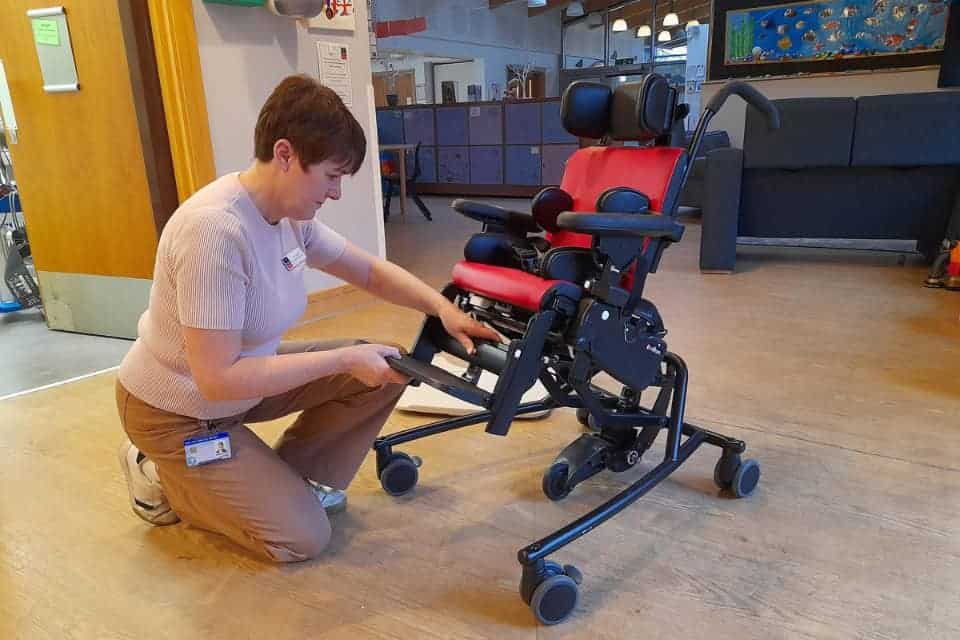
“When children come into the hospice for care, we support their families and the care team with our assessments, observations and interventions. This might be by informing care plans, using the right strategies to support them or looking at what equipment we need here at the hospice.”
Children with complex needs struggle to be comfortable when they are sleeping or sitting, because their brain is telling their body to move in ways that aren’t functional.
“We use postural management to support them, and the idea is that if they’re more immersed and symmetrical in their lying or seating position, the more comfortable they’re going to be,” said Jo.
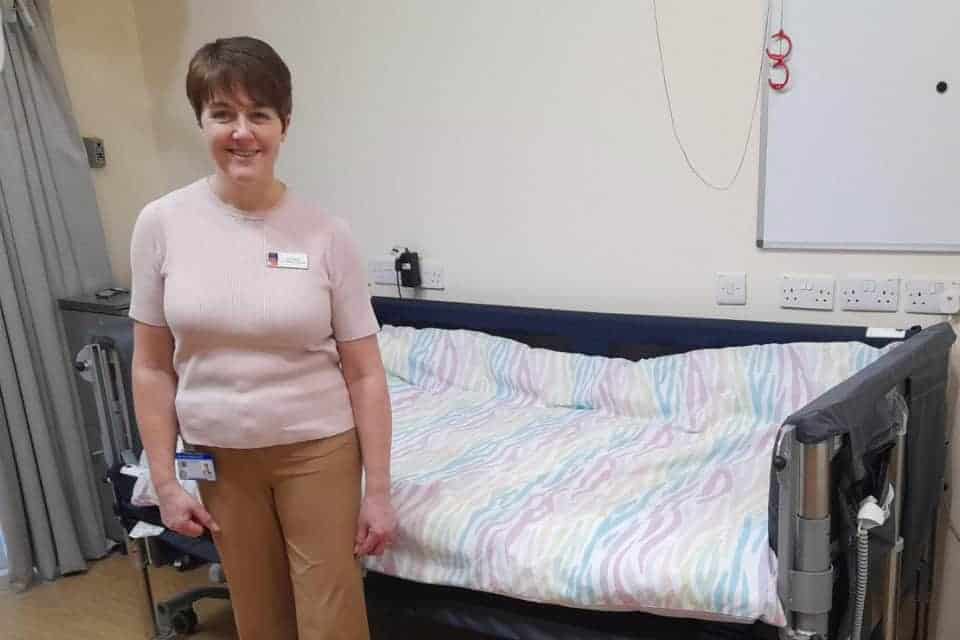
“It can be about having the right equipment in place at the right time. If a child is uncomfortable because their body isn’t well supported when trying to sleep or when sitting during the day, they’ll not only be in pain but also exhausted.
“If we can help to support them better by, for example, supporting them in a sleep system, the more comfortable they’re going to be. That, in turn, means they’ll be able to concentrate more on doing the activities they want and need to do, which will help their emotional wellbeing.
“Children grow and their needs change, which can happen rapidly and need swift input.
“We’re privileged to work in an environment where we can see those changes or are aware they’re happening in the community, due to our collaborative working with the symptom management team, care-floor staff, community therapy colleagues and many more.
“We also work with our colleagues to help support families to be where they want to be at end-of-life, where possible, looking at supporting with the right equipment at the right time.
“This can also really help with the baby, child or young person’s comfort, pain management, management of other symptoms and ability to do the activities they want to do for as long as they’re physically able to.”
Jo says she and her colleagues are always ‘appreciative and respectful’ that introducing new equipment can be tricky for families.
“We might be the first people to introduce hoisting to them, so it’s important we do it in a supportive and considered way,” she said.
“We’ll consider the most supportive environment for the child, so that may be the sensory room where the child is having a lovely experience and is more relaxed while we explain things to them and their family. While we’re looking at this, we’ll always consider the parents’ comfort.
“The Royal College of Occupational Therapists’ campaign for this year is ‘right support, right time – unlocking the power of OT’, and that’s very much what our job is about.
“If children aren’t well supported as they grow and their posture changes, they’ll experience pain and changes to their body, which will affect its ability to work as effectively.
“As an Occupational Therapist, I’m often considering how babies, children and young people can be supported to access the experiences they enjoy.
“This has included activity days tailored to children’s physical needs.
“Examples are our Felixstowe beach day and TreeTots pre-school group at The Treehouse, where we’ll see how we can support a child in seating or different lying positions so they can experience the wonderful play opportunities. Another example is our muscular dystrophy activity days, which bring together children and young people with similar needs.
“It’s so great to see the family connections these opportunities create and being able to share practical problem-solving advice – something I love!”
Jo refers to one example which came during a Music and Movement group at Milton.
“There was a baby who had very little movement and I helped his mum, showing her how to support his arm so he could activate some gentle music on an iPad,” she said.
“He gave us the biggest smile when he was able to do it, and it was very special and joyful moment for him and his mum to experience in his short life.
“A lot of my job involves problem-solving, which helps make a difference to the children and families we support. It’s such a special place to work, and I love what I do.”